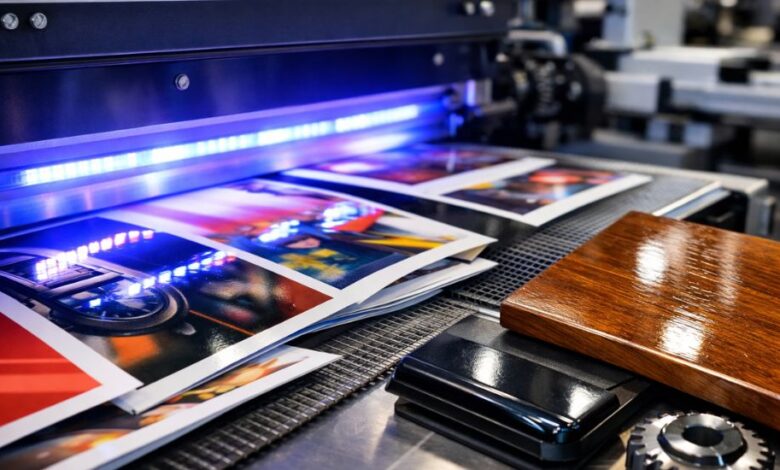
In modern manufacturing and printing industries, surface finishing plays an essential role in improving the durability, appearance, and quality of products. One technology that has gained significant attention for its efficiency and visual impact is Uvlack. This advanced coating method uses ultraviolet (UV) light to cure varnish or coatings almost instantly, creating a protective and attractive surface finish.
Uvlack technology is widely used in printing, packaging, furniture manufacturing, and industrial product finishing. It offers a combination of speed, environmental friendliness, and enhanced durability that traditional coatings often struggle to match. As industries move toward faster and more sustainable production methods, Uvlack has become a valuable solution for businesses seeking high-quality finishing results.
This article explores everything about Uvlack, including its meaning, working process, components, applications, advantages, and future potential.
What Is Uvlack?
Uvlack refers to a UV-curable varnish or protective coating applied to surfaces such as printed materials, packaging boxes, wood products, and other manufactured goods. The coating remains in liquid form during application but quickly hardens when exposed to ultraviolet light.
Unlike traditional coatings that rely on evaporation or chemical reactions to dry, Uvlack uses a photochemical reaction. When UV light activates certain compounds within the coating, the liquid transforms into a solid protective layer in just a few seconds.
This rapid curing process makes Uvlack particularly valuable in high-speed production environments where time efficiency is crucial. In addition to protecting surfaces, Uvlack also improves visual appeal by creating glossy, matte, or textured finishes.
How Uvlack Technology Works
The working principle of Uvlack is based on UV curing technology, a process that uses ultraviolet radiation to trigger polymerization in the coating material.
The typical Uvlack application process includes several steps:
1. Surface Preparation
Before applying the coating, the surface must be clean and smooth. Dust, grease, or moisture can affect adhesion and reduce the quality of the final finish.
2. Application of the Coating
The liquid Uvlack coating is applied to the surface using specialized equipment such as rollers, spray systems, or printing machines.
3. Exposure to UV Light
After the coating is applied, the product passes under high-intensity UV lamps. These lamps emit ultraviolet radiation that activates photoinitiators within the coating.
4. Instant Curing
Once activated, the photoinitiators start a chemical reaction that forms a solid polymer network. This process happens almost instantly, turning the liquid coating into a durable protective layer.
5. Final Inspection
After curing, the coated surface is inspected to ensure uniform coverage and proper finishing.
Because the curing process is so fast, production lines can operate more efficiently with minimal waiting time.
Key Components of Uvlack Coatings
Uvlack coatings are carefully formulated using several essential ingredients. Each component contributes to the coating’s performance and durability.
Oligomers
Oligomers form the structural backbone of the coating. They determine important properties such as hardness, flexibility, and chemical resistance.
Reactive Monomers
Monomers help control the viscosity of the coating and improve its ability to spread evenly across the surface.
Photoinitiators
Photoinitiators are the most critical component in UV coatings. They absorb ultraviolet light and initiate the chemical reaction that causes the coating to cure.
Additives
Various additives are included to improve specific characteristics such as gloss level, scratch resistance, adhesion, and color stability.
These components work together to produce a coating that is both durable and visually appealing.
Common Applications of Uvlack
Printing Industry
One of the most common uses of Uvlack is in the printing industry. Printed materials such as brochures, catalogs, magazines, and business cards often use UV coatings to enhance visual quality.
Uvlack helps printed colors appear brighter and more vibrant. It also protects the ink from smudging, fading, and physical damage.
Packaging Industry
Packaging companies frequently use Uvlack to improve both the appearance and durability of product packaging.
Luxury packaging, cosmetic boxes, and premium product packaging often include spot UV coatings that highlight logos or design elements with a glossy effect.
Furniture and Wood Finishing
Uvlack coatings are widely used in furniture manufacturing. Wooden surfaces coated with UV varnish become more resistant to scratches, moisture, and chemicals.
This makes the coating ideal for cabinets, flooring, decorative panels, and office furniture.
Electronics and Consumer Products
In the electronics industry, Uvlack coatings are sometimes used to protect components and surfaces from environmental damage. Consumer products such as plastic housings, display panels, and accessories can benefit from UV-cured coatings.
Automotive and Industrial Manufacturing
Certain automotive parts and industrial products also use UV coatings to improve durability and resistance to wear. The fast curing speed helps manufacturers maintain efficient production lines.
Types of Uvlack Finishes
Uvlack coatings are available in different finishing styles depending on the desired visual effect.
Gloss Finish
Gloss UV coating creates a shiny and reflective surface that enhances color depth and vibrancy. It is commonly used in marketing materials and product packaging.
Matte Finish
Matte UV coating produces a smooth, non-reflective surface that gives products a sophisticated and elegant appearance.
Satin Finish
Satin coatings provide a balance between gloss and matte finishes, offering subtle shine without excessive reflection.
Spot UV Coating
Spot UV is applied only to selected areas of a design. It is often used to highlight logos, images, or text on printed materials and packaging.
These finishing options allow designers and manufacturers to achieve unique visual effects.
Advantages of Using Uvlack
Extremely Fast Curing
One of the biggest advantages of Uvlack is its rapid curing speed. Products can be processed immediately after exposure to UV light, significantly increasing production efficiency.
Improved Durability
Uvlack coatings provide strong resistance against scratches, chemicals, and environmental damage. This extends the lifespan of coated products.
Enhanced Visual Appeal
UV coatings create vibrant colors and attractive finishes, making products more visually appealing to customers.
Reduced Environmental Impact
Unlike many traditional solvent-based coatings, UV coatings release very low levels of volatile organic compounds (VOCs). This makes them a more environmentally friendly option.
Cost Efficiency
Although the equipment required for UV curing can be expensive initially, the long-term efficiency and reduced drying time can lead to lower production costs.
Limitations of Uvlack
Despite its many benefits, Uvlack technology also has some limitations.
One challenge is the need for specialized UV curing equipment, which may require significant initial investment. Additionally, some UV coatings may crack on surfaces that are heavily folded or bent, such as certain paper products.
Another limitation is that UV light must reach the coating surface directly for proper curing. Areas that are shadowed or blocked from UV exposure may not cure completely.
However, continuous improvements in UV technology are helping to overcome many of these challenges.
Future of Uvlack Technology
The future of Uvlack technology looks promising as industries continue to seek faster, more sustainable manufacturing processes. Innovations in UV LED technology are making curing systems more energy-efficient and longer lasting.
Researchers are also developing new UV coating formulations with improved flexibility, durability, and environmental safety.
As demand for high-quality packaging, printing, and industrial finishes continues to grow, Uvlack is expected to remain a key technology in modern manufacturing.
Conclusion
Uvlack has become an important innovation in surface finishing technology. By using ultraviolet light to cure coatings instantly, it offers a faster, more efficient alternative to traditional finishing methods.
Its applications across printing, packaging, furniture manufacturing, and industrial production demonstrate its versatility and effectiveness. With benefits such as durability, improved appearance, and environmentally friendly processing, Uvlack continues to gain popularity in many industries.
As technology advances and new UV curing methods emerge, the role of Uvlack in manufacturing and product design will likely expand even further. Businesses seeking high-quality finishes and efficient production methods are increasingly turning to this powerful coating technology.
This article is published for informational and educational purposes on the technology blog Technologies Era, which explores emerging innovations, digital trends, and modern industrial solutions.
You may also read: Repmold: The Future of Intelligent Mold Manufacturing