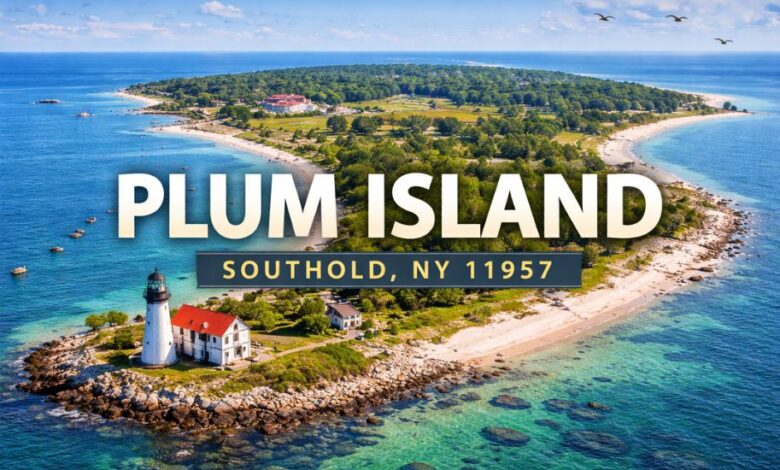
Located just off the northeastern tip of Long Island, Plum Island, Southold NY 11957 is one of the most intriguing and restricted places in the United States. Known for its secretive research facilities, rich military past, and untouched natural ecosystems, the island has long captured the curiosity of historians, scientists, and the general public alike.
Despite its proximity to the mainland, Plum Island remains largely inaccessible, adding to its mystique. Over the years, it has evolved from Native American land to a strategic military base and eventually into a high-security research center. Today, it stands at the crossroads of science, conservation, and historical preservation.
📊 Quick Bio Table: Plum Island Overview
| Attribute | Details |
|---|---|
| Location | Southold, Suffolk County, New York, USA |
| ZIP Code | 11957 |
| Size | Approx. 3 miles long, 1 mile wide |
| Ownership | U.S. Government |
| Established Use | Military (1897), Research (1954–Present) |
| Key Facility | Plum Island Animal Disease Center |
| Public Access | Restricted |
| Known For | Disease research, wildlife habitat, historical sites |
📍 Geographic Location and Setting
Plum Island lies between the waters of Long Island Sound and Gardiners Bay, just a few miles from Orient Point in Southold. Its strategic position made it historically valuable for coastal defense and later ideal for isolated scientific research.
The island spans roughly 840 acres and features diverse terrain, including sandy beaches, wetlands, grasslands, and forested areas. This geographic isolation has been both a strength and a defining feature, allowing it to function as a secure research facility while also preserving its natural ecosystems.
🏛️ Historical Evolution of Plum Island
Early Indigenous and Colonial Era
Before European settlers arrived, Plum Island was used by Native American tribes, particularly the Montaukett people, for seasonal hunting and fishing. In the mid-17th century, the island was sold to colonial settlers and used primarily for agriculture and livestock grazing.
For nearly two centuries, Plum Island remained a quiet agricultural outpost, largely untouched by industrial development.
Military Significance: Fort Terry
In 1897, the U.S. government established Fort Terry on Plum Island as part of its coastal defense system. The fort was designed to protect the eastern approaches to Long Island Sound, particularly during the Spanish-American War and later conflicts.
Fort Terry was equipped with heavy artillery and served as a training and defense installation through both World Wars. Although it was eventually decommissioned, remnants of the fort still stand today, offering a glimpse into the island’s military past.
🧪 Scientific Importance: Plum Island Animal Disease Center
In 1954, Plum Island entered a new phase of significance with the establishment of the Plum Island Animal Disease Center (PIADC). Operated by the U.S. Department of Homeland Security, this facility became a critical hub for studying foreign animal diseases.
Key Functions:
-
Research on highly contagious livestock diseases
-
Development of vaccines and diagnostic tools
-
Protection of the U.S. food supply and agriculture
The island’s isolation made it an ideal location for such sensitive work, minimizing the risk of accidental outbreaks on the mainland.
Due to the nature of the research, access to the island has always been strictly controlled. This secrecy has fueled speculation and conspiracy theories, but its primary mission remains grounded in agricultural safety and biosecurity.
🌿 Ecology and Wildlife Haven
One of the most remarkable aspects of Plum Island, Southold NY 11957, is its thriving natural environment. Because public access has been restricted for decades, the island has become a sanctuary for wildlife.
Key Ecological Highlights:
-
Over 200 species of birds, including endangered species
-
One of the largest seal haul-out areas in New York
-
Rare coastal ecosystems and wetlands
-
Habitat for marine life such as turtles and porpoises
Endangered birds like piping plovers and roseate terns rely on the island’s undisturbed beaches for nesting. The surrounding waters are equally rich, supporting a wide variety of marine species.
Environmental organizations have increasingly recognized Plum Island as a critical conservation site, advocating for its protection in the future.
🏝️ Landmarks and Notable Features
Plum Island Lighthouse
Built in the early 19th century and later rebuilt in 1869, the lighthouse remains one of the island’s most iconic structures. It has guided ships safely through the treacherous Plum Gut channel for generations.
Historic Structures
In addition to Fort Terry, the island contains numerous abandoned buildings and research facilities, many of which are now considered historically significant.
Natural Landscapes
From sandy shores to dense vegetation, Plum Island offers a diverse landscape rarely seen in such an undisturbed state in the region.
🔮 The Future of Plum Island
In recent years, discussions about the future of Plum Island have intensified. With plans to relocate research operations to a new facility in Kansas, questions have arisen about what will become of the island.
Possible Futures:
-
Conversion into a national wildlife refuge
-
Preservation as a historical site
-
Limited public access for education and tourism
In 2020, legislation halted plans to sell the island to private developers, reflecting growing public interest in preserving its ecological and historical value.
Many conservation groups are advocating for transforming Plum Island into a protected area, ensuring that its unique environment remains intact for future generations.
🌊 Tourism and Public Curiosity
Although Plum Island itself is not open to visitors, it continues to attract attention from nearby areas. Visitors can view the island from boats or ferries departing near Orient Point, offering distant glimpses of its coastline and lighthouse.
The island’s restricted status has only increased its allure, making it a subject of documentaries, books, and online discussions.
✍️ Conclusion
Plum Island, Southold NY 11957 is a rare combination of secrecy, history, and natural beauty. From its early days as Native American land to its role in national defense and scientific research, the island has continually evolved while maintaining an air of mystery.
Today, it represents a unique opportunity to balance conservation, historical preservation, and public interest. As debates about its future continue, Plum Island stands as a powerful reminder of how isolated places can hold immense cultural, scientific, and ecological value.
This article is proudly presented by Technologies Era, bringing you deep insights into fascinating places around the world.
You may also read: Tom Riding Through Modern Travel Stories