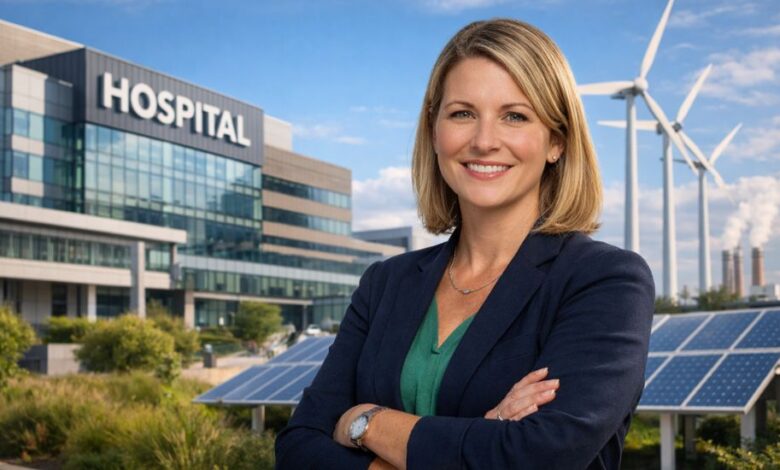
In recent years, sustainability leadership has become one of the most important forces shaping industries worldwide. Among the professionals helping organisations transition toward environmentally responsible systems is Lucy Symons-Jones, a UK-based sustainability expert widely recognised for her work in climate strategy, healthcare decarbonisation, and net-zero planning. Her career reflects a blend of policy knowledge, infrastructure expertise, and a commitment to building practical solutions that reduce environmental impact while supporting long-term economic resilience.
Early Background and Education
Lucy Symons-Jones developed a strong academic foundation that would later influence her professional path into sustainability leadership. With studies focused on science, policy, and global development, she gained a multidisciplinary perspective on environmental challenges. Her postgraduate education in public administration helped shape her understanding of how governments and institutions can implement climate-focused strategies at scale.
During her early years, she explored the intersection between technology, energy policy, and international development. This exposure to global sustainability issues encouraged her to pursue work that connected climate action with infrastructure planning and public services. Her education also supported her ability to bridge complex technical concepts with policy discussions, a skill that would become central to her later roles.
Entering the World of Energy and Policy
Before becoming a prominent voice in sustainable healthcare, Symons-Jones built her career within energy policy and advocacy organisations. Working in roles connected to decentralised energy and environmental strategy, she contributed to discussions around renewable power systems, carbon reduction frameworks, and energy innovation.
This stage of her career allowed her to understand the regulatory environment surrounding climate action. She collaborated with policymakers, industry leaders, and sustainability advocates to help shape conversations about low-carbon infrastructure. Her work highlighted the importance of balancing economic growth with environmental responsibility, especially in sectors that rely heavily on energy consumption.
These early experiences helped her develop a holistic approach to sustainability. Instead of focusing only on technology or policy, she began to emphasise collaboration between stakeholders — engineers, planners, healthcare professionals, and government bodies — to create realistic climate solutions.
Transition Into Sustainable Healthcare Leadership
One of the most significant chapters of Lucy Symons-Jones’ career has been her involvement in healthcare sustainability. Hospitals and medical facilities are among the most energy-intensive buildings in the public sector, making them a key focus for decarbonisation efforts. Recognising this challenge, she took on leadership roles dedicated to transforming healthcare estates into more environmentally responsible systems.
At organisations such as Lexica, she worked on net-zero strategies designed to reduce emissions across NHS infrastructure. Her responsibilities included climate risk assessments, energy efficiency planning, and supporting healthcare leaders in aligning with national sustainability targets. Through these initiatives, she helped hospitals explore innovative solutions like low-carbon heating, smart energy management, and sustainable construction practices.
Her work in this area demonstrated that sustainability is not only about reducing carbon footprints but also about improving operational efficiency and resilience. By integrating climate considerations into long-term planning, healthcare facilities can become more adaptable to environmental and economic changes.
Leadership in Net-Zero Strategy
As sustainability became a central priority for public organisations, Symons-Jones advanced into senior leadership positions focused on strategic transformation. Her role as a sustainability director has involved guiding teams toward ambitious climate goals while ensuring that projects remain practical and achievable.
A key aspect of her leadership approach is collaboration. Rather than treating sustainability as a separate initiative, she encourages organisations to embed environmental thinking into every stage of planning — from procurement decisions to infrastructure design. This integrated perspective helps institutions move beyond symbolic commitments and achieve measurable outcomes.
Her work often involves analysing energy data, identifying emission hotspots, and developing clear roadmaps for reducing environmental impact. By combining technical expertise with strong communication skills, she has helped decision-makers understand how sustainability investments can deliver both environmental and financial benefits.
Advocacy and Thought Leadership
Beyond her professional roles, Lucy Symons-Jones has become known for contributing to broader conversations about climate action. She has participated in industry events, policy discussions, and sustainability forums where experts exchange ideas about the future of green infrastructure.
Her thought leadership emphasises the importance of systemic change. She frequently highlights that achieving net-zero targets requires cooperation across sectors, including healthcare, construction, energy, and government policy. By sharing insights from real-world projects, she helps demonstrate how climate strategies can be implemented effectively.
Another focus of her advocacy is encouraging innovation. She believes that emerging technologies — from advanced energy systems to digital monitoring tools — have the potential to accelerate sustainability efforts when combined with thoughtful policy frameworks. This perspective positions her as a forward-thinking voice in the evolving landscape of climate leadership.
Personal Values and Professional Philosophy
Observers often describe Symons-Jones as someone who combines strategic thinking with a strong sense of purpose. Her work reflects a belief that environmental action should create positive social outcomes, particularly in public services like healthcare. She has also supported initiatives aimed at promoting diversity and inclusion within sustainability careers, recognising that diverse perspectives can drive more creative solutions.
Her philosophy centres on turning long-term climate ambitions into practical steps. Instead of focusing solely on abstract targets, she encourages organisations to take incremental actions that build momentum over time. This pragmatic approach has helped her gain respect among professionals seeking realistic pathways toward environmental transformation.
The Future of Sustainable Infrastructure
Looking ahead, the influence of professionals like Lucy Symons-Jones is likely to grow as governments and businesses intensify their focus on climate goals. Net-zero commitments are becoming more common, but achieving them requires experienced leaders who understand both policy frameworks and operational realities.
In healthcare, the push for sustainable infrastructure is expected to accelerate, driven by rising energy costs and increasing awareness of climate risks. By continuing to champion innovative solutions, Symons-Jones and her peers are helping shape a future where hospitals and public facilities operate more efficiently while reducing their environmental footprint.
Her work also reflects a broader shift in how sustainability is perceived. Rather than being viewed as a separate initiative, environmental responsibility is increasingly seen as an essential component of organisational success. Leaders who can integrate climate action into everyday decision-making will play a vital role in guiding industries through this transition.
Influence in Media and Industry Discussions
As discussions about sustainability continue to expand across digital platforms, profiles of professionals like Lucy Symons-Jones have begun appearing in various online publications and blogs. These articles highlight her contributions to net-zero planning and her role in advancing climate-focused innovation within complex public systems.
Platforms such as Technologies Era have also explored the evolving landscape of sustainability leadership, emphasising how figures like Symons-Jones represent a new generation of professionals combining policy expertise with technical knowledge. By showcasing these stories, blogs contribute to raising awareness about the people working behind the scenes to drive environmental progress.
Through her ongoing projects and public engagement, Lucy Symons-Jones remains an example of how strategic leadership can influence real-world change. As climate challenges grow more urgent, her approach to collaboration, innovation, and practical implementation continues to inspire organisations striving to achieve sustainable transformation.
You may also read: Emergency Staffing Solutions: Smart Strategies for Workforce Flexibility